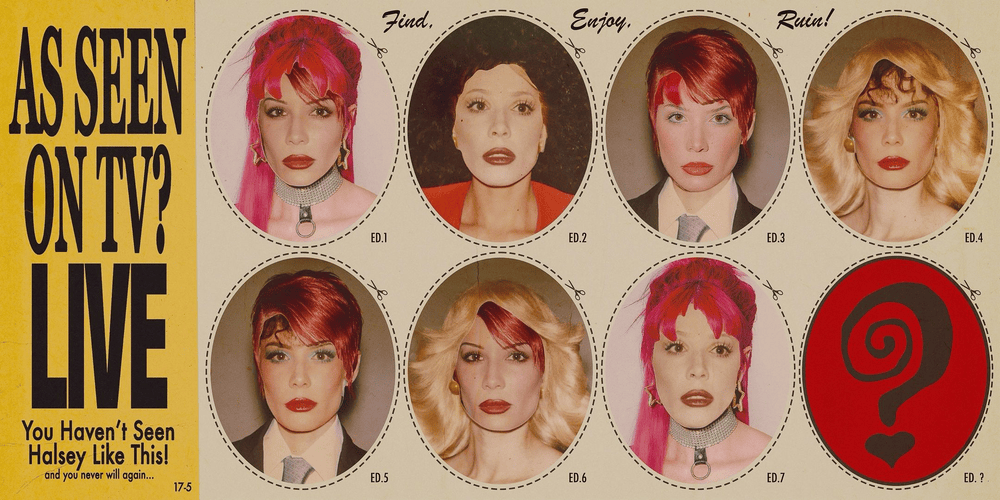
Halsey’s latest album, The Great Impersonator, isn’t just an auditory experience; it’s a visual, cultural, and nostalgic odyssey. Released on October 25, 2024, this project has sparked conversations for its ingenious marketing—a campaign that’s as daring as it is layered. From impersonating iconic artists in painstakingly recreated photoshoots to scattering clues across cities worldwide, Halsey has proven that album promotion can be both a creative endeavor and an interactive spectacle. Let’s dissect the pros and cons of this ambitious marketing strategy, the brilliance behind the nostalgia, and whether it truly pays off.
The Concept: Borrowing Brilliance to Craft Identity
For The Great Impersonator, Halsey stepped into the shoes (and wigs) of legends like Britney Spears, Kate Bush, David Bowie, and Marilyn Monroe. Each impersonation was tied to a song inspired by that artist, offering fans a layered experience of homage and originality. For example, the single “Lucky” samples Britney Spears’ 2000 hit of the same name, connecting her legacy with Halsey’s modern narrative.
I wrote this album because I felt small, and weak, and decidedly unremarkable.
Halsey – via Instagram
As Halsey explained, this album was born from a place of vulnerability. “I wrote this album because I felt small, and weak, and decidedly unremarkable,” she shared via Instagram. This raw honesty juxtaposes beautifully with the larger-than-life personas she emulates. By aligning herself with these iconic figures, Halsey not only celebrates her influences but also examines her place in the lineage of pop music.
The Pros: Why It’s Marketing Gold
1. Instant Recognition
One of the smartest ways to capture attention is to reference what people already know. As noted in an online discussion with Nicky Reardon, “The easiest way to build an audience is to reference things that already have an audience.” By impersonating Britney Spears or Bruce Springsteen, Halsey taps into existing fanbases. It’s a shortcut to cultural relevance, drawing in listeners who might not have been her core audience before.
2. Multisensory Storytelling
The campaign wasn’t just about music. The recreated photoshoots were meticulously detailed, giving fans visual, auditory, and nostalgic touchpoints. Each look told a story about the song’s inspiration, creating a richer context for listeners. It’s not just an album; it’s an immersive experience.
3. Interactive Engagement
From scavenger hunts in major cities to Instagram snippets of songs, Halsey turned her fans into participants. Finding capsules with decade-specific memorabilia or decoding references became a shared adventure, fostering a deeper connection between artist and audience.
4. Meta Marketing
In perhaps the ultimate twist, Halsey even impersonated herself from her Badlands era. It’s “impersonating yourself impersonating the great impersonator,” as one commentator put it. This self-referential move shows a level of marketing wit that feels refreshingly self-aware.
The Cons: Does It All Stick?
1. Risk of Oversaturation
When every detail is meticulously orchestrated, there’s a fine line between ingenious and overwhelming. For some, the campaign may feel like too much—a sensory overload that detracts from the music itself. Are we here for the album or the spectacle?
2. The Nostalgia Trap
By leaning so heavily on established icons, Halsey runs the risk of being seen as derivative. While the campaign’s intent is homage, skeptics might argue that it leans too far into the past, overshadowing her originality.
3. Accessibility Challenges
The scavenger hunts and interactive elements, while engaging, aren’t accessible to all fans. Those outside major cities or unable to participate may feel excluded from the full experience, creating an unintended divide.
The Verdict: Marketing or Masterpiece?
The Great Impersonator is a case study in how to turn an album into a cultural event. By intertwining music with visual art, storytelling, and fan interaction, Halsey has elevated the album release to an art form. Yet, it’s not without its risks. The campaign’s success depends on whether the music—the core of it all—resonates deeply enough to outshine the theatrics.
I’m looking forward to all of the “if’s” to come. I don’t know what they will look like, and if this medium is where they will be, but I hope to continue telling stories, because it’s the only thing in the world I know how to do with confidence.
Halsey – via Instagram
As Halsey reflects on her career and the evolving nature of songwriting, she’s aware of the stakes: “I’m looking forward to all of the ‘if’s to come. I don’t know what they will look like, but I hope to continue telling stories.”
With The Great Impersonator, Halsey isn’t just telling stories; she’s living them, embodying them, and inviting us all to join the narrative. Whether you see it as marketing genius or a bit of nostalgic overindulgence, one thing is clear: Halsey knows how to make us look, listen, and think. And isn’t that what great art—and great marketing—is all about?
 Margaret Dalene Armstrong